Once, a man planted a small tree.
He watered it every day, protected it from the wind, and placed a support next to it.
And another man said to him:
“Why are you so worried about it? It’s still small. If it grows crooked, you can just prune the branches later.”
The first man replied:
—By the time I grow up, it'll be too late.
Because a tree takes shape when it is still young.
And so does a person.
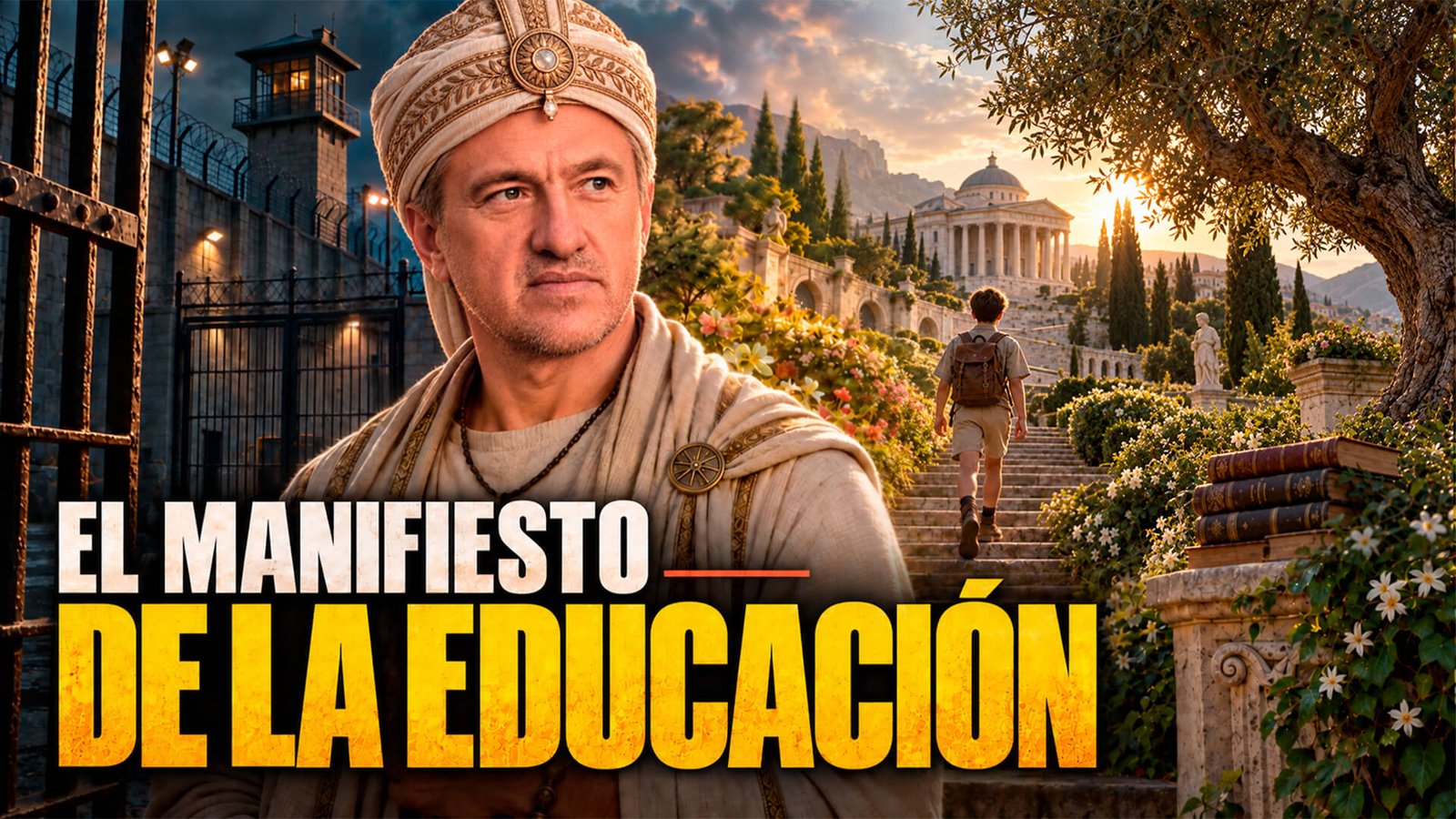
That is precisely why I am writing this manifesto.
I'm writing this right after hearing some terrible news:
They want to imprison children as young as fourteen.
Fourteen years.
He's a boy.
The age when a person is just beginning to understand who they are.
He still doesn't know what he wants to be.
He doesn't know what career he'll choose.
His personality is still developing.
His psyche is still developing.
Their concepts of right and wrong are still developing.
And right at this moment, we say to him:
"Now you're a criminal.
And we’ll send you to a place where you’ll be surrounded by criminals.”
But let me ask:
What will a child become if we put him or her in an environment like that?
What if, instead of their family, they’re surrounded by inmates?
If, instead of teachers, there are guards?
What if, instead of books, art, and spiritual mentors, you are faced with violence, fear, aggression, and the struggle to survive?
What if every day you see exactly that kind of behavior?
What will it become?
Is it really that hard to understand?
A person comes to resemble the environment in which they grow up.
For some reason, we understand this perfectly when it comes to a young child.
We try to provide him with good teachers.
We try to surround him with care.
We chose your school.
We keep an eye on who she hangs out with.
We try to protect him from bad influences.
Because we know:
The environment shapes us.
But then, why is it that when a child makes a mistake, we suddenly forget this principle?
Why, instead of changing his environment, do we put him in an even more destructive one?
Why do we choose punishment instead of education?
Why, instead of showing the child another path, do we show him the path of a criminal?
Responsibility empowers the individual
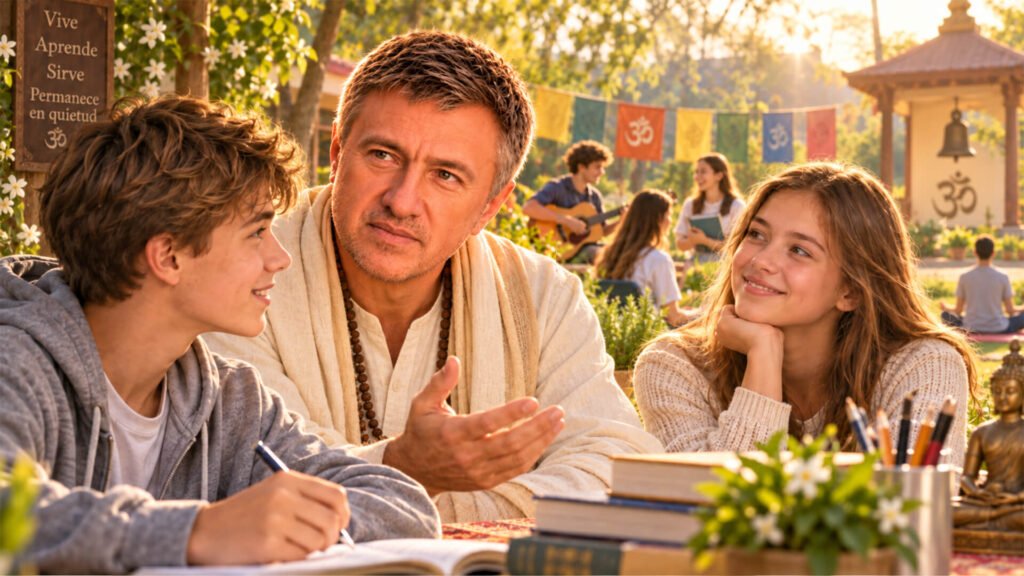
All too often, we think that education is just words.
You have to explain to the child what's right.
What's wrong?
What can be done?
What You Can't Do.
But a child learns much more—not from what he is told.
They learn from what they see every day.
If the people around you respect one another, you'll learn to be respectful.
If there are people around you who know how to forgive, learn to forgive.
If there are people around you who help others, learn to help.
If you are surrounded by highly cultured people, your own culture will grow.
If he is surrounded by people of high moral character, morality becomes second nature to him.
But if he is surrounded by violence, lies, aggression, and crime, that is exactly what becomes his school.
And so there's no point in asking later:
"Why did he turn out that way?"
We should have asked first:
"What did he see before him?"
Therefore, if we truly want to reduce crime, we shouldn't start with prisons.
We must start with education.
Not when a person has already become a criminal.
But when he's still a child.
THREE PILLARS OF EDUCATION
I believe that a person’s true education should consist of at least three major areas.
Social education.
Cultural education.
Religious education.
There are three different levels in a person's education.
The first one teaches you how to live in society.
The second one teaches you to appreciate beauty.
The third one teaches you to understand the soul.
And if at least one of these levels is removed, the person becomes incomplete.
First: social education
School shouldn't just teach children how to solve problems.
You should prepare him for life.
How to Build Relationships with Others.
How to Communicate.
How to Work.
How to Find Your Calling.
How to Do Business.
How to Manage Money.
How to lead a healthy lifestyle.
How to Provide First Aid.
How to Understand the Fundamentals of Law.
How to Protect Your Rights.
How to Read a Contract.
How to Avoid Being Deceived.
How to interact with the opposite sex.
How to Start a Family.
How to Resolve Conflicts.
How to Take Responsibility for Your Actions.
A person faces all of this in life.
But for some reason, this is very often not taught anywhere.
You can study integrals, sines, cosines, and valences for many years.
But if a person doesn’t know how to build a relationship with a loved one, what good is that knowledge?
What if you don't know how to administer first aid to your child or your parents?
What if you don't understand your own legal rights?
What if you don't know how to choose a career?
What if you don't know how to raise a normal family?
Education shouldn't just prepare a person for an exam.
You should prepare her for life.
Second: cultural education
But intellect alone is not enough.
You can be a highly educated person and still be crude on the inside.
You can know a multitude of formulas and still fail to appreciate beauty.
You can possess a vast amount of information and still not understand anything with your heart.
That is why a person needs culture.
Music.
The painting.
Poetry.
Architecture.
Ancient temples.
The frescoes.
The sculpture.
Great Books.
The Great Epic Works.
The Mahabharata.
The Ramayana.
Spiritual music.
Great works of art.
That which makes a person stop and feel:
"How beautiful this world is."
Because culture shapes more than just the mind.
It shapes a person's emotional world.
It's one thing to read about compassion.
And it's a whole different story when you listen to music that forces you to feel compassion.
It's one thing to read about beauty.
It’s quite another thing to see a work of art that suddenly leaves you speechless.
It’s one thing to know about spirituality.
And it's a whole different matter to feel it.
Therefore, culture should bring people closer to the sublime.
So that, from childhood on, a child sees not only what sells best.
Not just aggression.
Not just crude humor.
It's not just violence.
It's not just about entertainment.
Instead, let them see beauty.
Because if a person is surrounded by beauty from childhood, their emotional world also gradually expands.
They learn to distinguish:
where is beauty,
and where the ugly part is.
Where is the high place,
and where the primitive is.
Where is culture,
and where the barbarity lies.
Third: Religious Education
But not even culture answers the main question.
What is the purpose of human life?
Why were we born?
What is the soul?
What is God?
What is the meaning of life?
Why is it necessary to forgive?
Why can’t we live just for ourselves?
Why Should We Help Others?
Why can't we repay evil with evil?
What is good?
What is compassion?
What happens to a person when hatred arises within them?
How should a person work on themselves?
How can they become a better person?
These are no longer simply questions of social behavior.
These are questions from the heart.
And this is precisely where religious education comes into play.
I'm not saying we should force a child to believe.
I'm saying that a person should know that humanity has been asking these questions for thousands of years.
You should be familiar with your own religious tradition.
You should also have the opportunity to learn about other religions.
You must understand what they taught people.
Why, throughout all ages and in every nation, there has been a longing for God.
Why have human beings always sought meaning?
Why People Learned to Forgive.
Because they were trying to overcome greed, hatred, envy, and selfishness within themselves.
Because without this, a person can receive an education that focuses on the mind.
You can gain a cultural understanding of emotions.
But they never learn to understand their own soul.
And then something strange happens:
A person knows how to use a computer, but doesn't know how to control their own anger.
He knows how to count money, but he doesn't know how to forgive.
He knows a great deal of information, but he doesn't know what he lives for.
You can graduate from college, but you don't understand how to become a good person.
Is this really what education is all about?
What are we doing with the children?
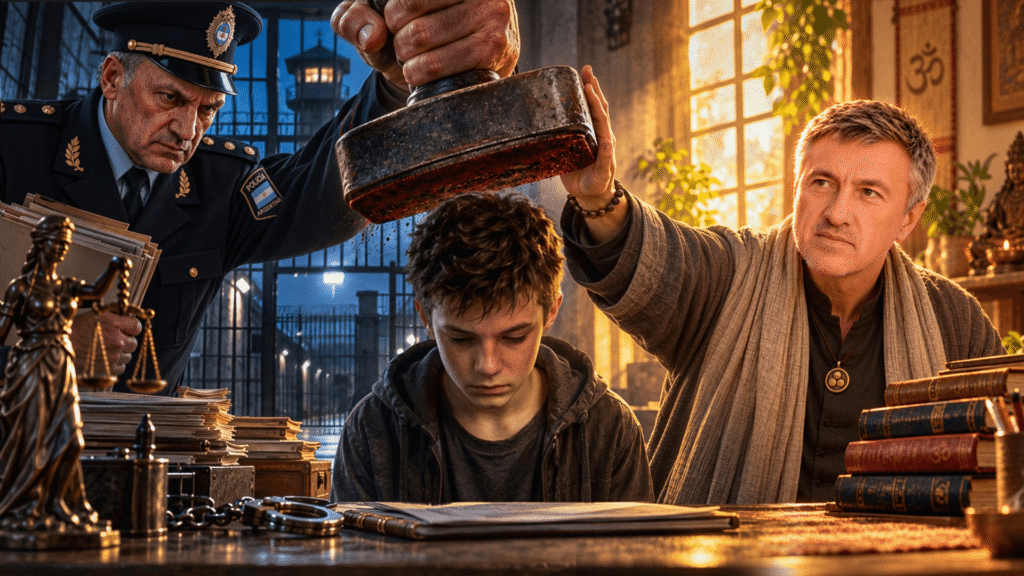
And this is where the main question arises.
If a child is fourteen years old, should he or she be sent to an environment where these three types of education have practically disappeared?
Social education?
It is replaced by the prison hierarchy.
Culture?
It is replaced by a culture of survival.
Religious education?
It's practically nonexistent.
Instead, the child receives completely different lessons.
What will a fourteen-year-old boy become if, instead of a family, school, and a normal society, he is surrounded by criminals?
Haven’t you decided yet what you want to be?
Prison will decide for you!
There, they’ll teach you how to speak and behave.
How you should treat others, viewing them as naive people who can be deceived.
How to survive in the criminal world and who is the authority
whose example you should follow.
How you should lie and be a con artist.
How you should be cruel and what principles to live by. How you should steal so you don’t get caught.
And so the state itself creates the very environment from which crime subsequently arises.
First it says:
"This child is dangerous."
And then he puts him somewhere where they'll teach him to be dangerous.
Isn't that a contradiction?
The Example of Krishnamurti
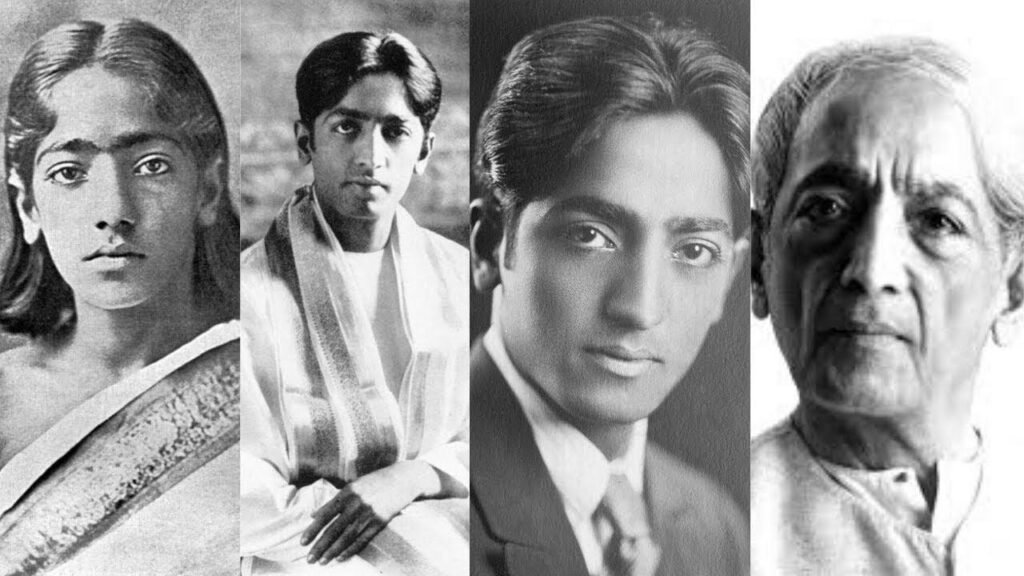
There is a very important example that makes us reflect on the nature of education.
Jiddu Krishnamurti was an ordinary Indian boy who, during his childhood, was discovered by Theosophists who decided to raise him as a future spiritual teacher. They surrounded him with highly educated and spiritually developed mentors, creating an environment for him in which great attention was paid to morality, culture, self-discipline, and spiritual development.
Unlike the tradition in which a special child is chosen as the supposed reincarnation of a spiritual leader, in Krishnamurti’s case, what mattered was the very principle of education itself: what an environment composed of wise, moral, and highly cultured mentors can offer a person.
Even in his youth, Krishnamurti began to form his own philosophical views, and he later became one of the most famous spiritual thinkers of the 20th century. His story is often cited as an example of how profoundly environment and education can influence the development of personality.
And this raises a simple question:
What happens to a person if they are surrounded by wise people from childhood?
What if they’re taught not only how to make money, but also how to understand people?
What if she is surrounded not only by common, everyday examples, but also by people of high culture and spirituality?
What if you are constantly faced with examples of different behavior?
Of course, Krishnamurti's story itself is much more complex than any simple experiment.
But the principle remains extremely important:
The educational environment has the power to change a person's destiny.
Look at a child.
He's little today.
Tomorrow he’ll be an adult.
But between these two states lie thousands of hours of observation.
Thousands of conversations.
Thousands of examples.
Thousands of things adults do that he sees.
And this is how his personality gradually takes shape.
That is why you cannot say:
"He's just a kid."
No.
It's a future human being.
A future father.
An expectant mother.
A future doctor.
Teacher.
Engineer.
Artist.
Scientist.
Citizen.
And what he will become depends largely on what we allow him to see today.
Not prison, but education
If the government truly wants to reduce crime, it must ask itself another question.
No: “How can we punish more people?”
Or: “Why Do Children Become Criminals?”
No: “How many more prisons do we need to build?”
Or: “What kind of environment are we creating for our children?”
No: “How can we make the punishment harsher?”
Instead: “How can we ensure that a child never feels the need to become a criminal?”
The money currently spent on increasing the number of prisons and guards and on strengthening the repressive system could be put to other uses.
To the schools.
To education.
To culture.
Sports.
Psychological and social support for families.
To libraries.
Let's get the music going.
To art.
To spiritual education.
To create an environment in which a child wants to be better.
Because crime cannot be defeated with a stick alone.
A stick can make a person afraid.
But it can't teach him to love.
Fear can stop a hand.
But you can't change a heart.
Prison can isolate a person.
But on its own, it cannot make it moral.
A child should not be placed in a criminal environment
And that is why I want to say this very clearly:
A child should not be used as a guinea pig for the prison system’s experiments.
If a child has made a mistake, you should give him or her a chance to make amends.
If society deems it necessary to restrict his freedom, there must be ways to do so that do not destroy his personality or cut him off from his social environment.
The family.
Loved ones.
The teachers.
Mentors.
Education.
Culture.
Spirituality.
This is what a child should be surrounded by.
Because at fourteen, it’s not too late to change one’s destiny.
On the contrary.
At age fourteen, one's destiny is just beginning to take shape.
And if we send a child into a criminal environment, we ourselves play a part in his or her transformation.
We ourselves choose what examples they will see.
We ourselves decide what words they will hear.
We ourselves create the space in which it will mature.
Therefore, the issue of juvenile delinquency is not just a matter concerning children.
It's a question about us.
By educating children, we are shaping the future
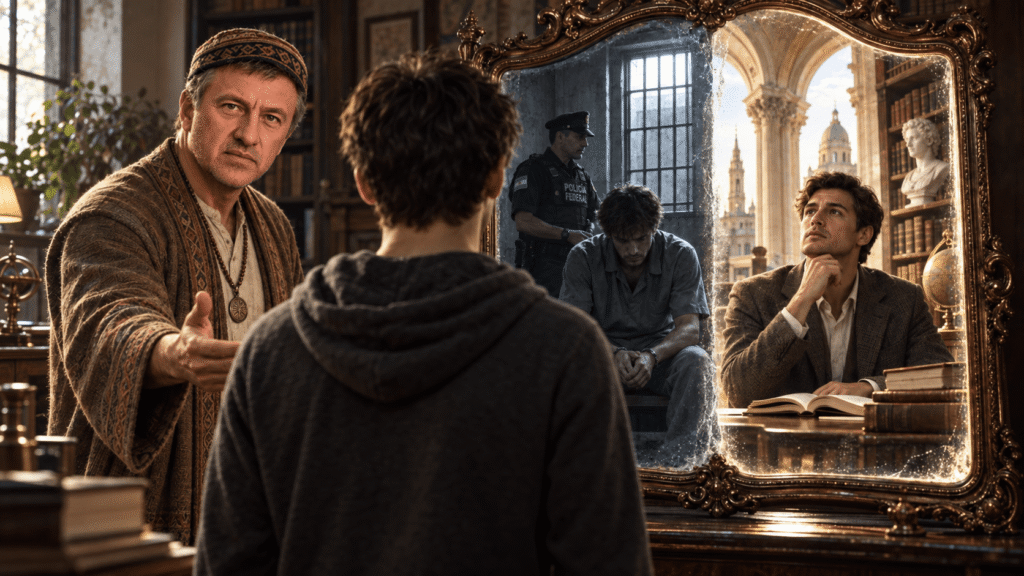
Each generation leaves the next not only houses, roads, and technologies.
It leaves him with the image of a human being.
And if we want our children to be human, we must be human ourselves.
If we want them to respect the law, we must treat them fairly.
If we want them not to be cruel, we must not raise them with cruelty.
If we want others to respect human life, we ourselves must treat human life as the greatest value.
Because a child doesn't learn from our words.
Learn from our lives.
And if the government says:
"We are fighting crime,"
but at the same time it creates an environment of fear, humiliation, and violence for children,
You should ask yourself:
What kind of people are you raising this way?
We cannot demand humanity from a generation that we ourselves have raised inhumanely.
We cannot put a child in jail and then be surprised that he came out of there harboring resentment.
We cannot deprive a person of a good role model and then blame them for choosing a bad one.
My Dream
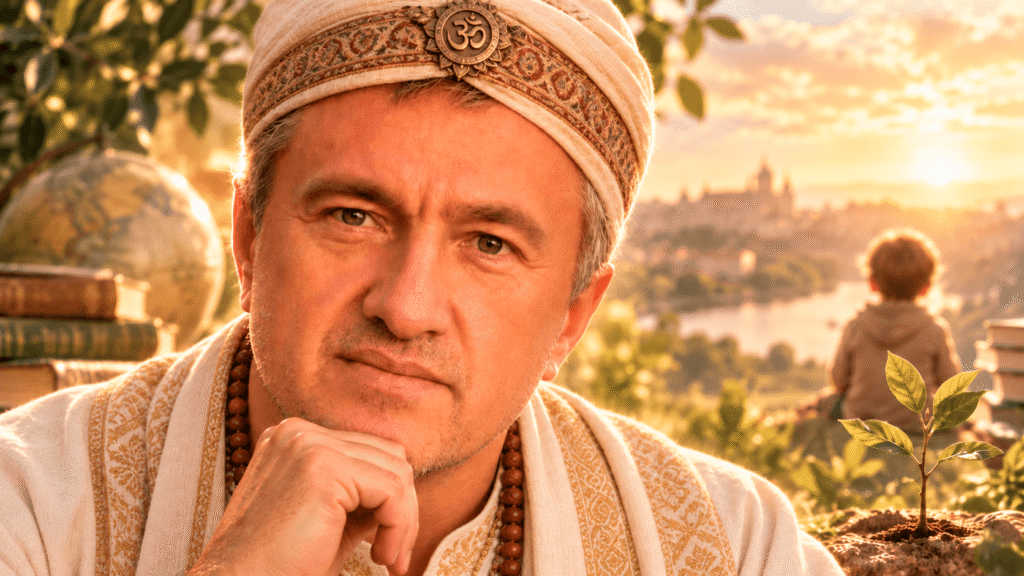
I dream of a different country.
With a different kind of school.
With a different education system.
A world in which a child is given not only knowledge, but also wisdom.
Not just a profession, but also an understanding of life.
Not just a diploma, but also culture.
Not just intellect, but also soul.
I dream that every child will have people in their lives whom they want to be like.
Teachers I admire.
Parents whom I respect.
Mentors you trust.
Artists, musicians, philosophers, scientists, and spiritual people who show you just how beautiful a human being can be.
Because the best way to fight crime is
Don't raise criminals.
The best way to combat cruelty is
to cultivate humanity.
The best way to change society is
change what we teach children.
And if we truly want fewer prisons, we need to do more than just close them.
We need to open schools.
Open cultural centers.
Create spaces for art.
To open the path to spirituality for children.
Give them the opportunity to see just how different a human being can be.
Because a child's destiny is not yet set.
He is a possibility.
It's a seed.
And what grows from it depends on the soil in which we plant it.
It can be planted in concrete.
And it can be planted in a human environment.
You can be surrounded by fear.
And you can surround yourself with love.
He may be exposed to violence.
And you can show them an example of generosity.
You can say to him:
"You're a criminal."
And you can say to him:
"You made a mistake. But you can still become someone else."
And our future depends precisely on this choice.
Because when we raise a child, we are actually raising the person who will one day become our whole world.
And that’s why I want to say:
Don't put children in jail.
Instill knowledge in children.
Sow the seeds of culture.
Sow kindness.
Sow compassion.
Sow the seeds of responsibility.
Sow love.
And then, one day, we won’t see any more prisons.
We'll see fewer crimes.
Not because people are more afraid of punishment.
But because they’ve become better people.
Because true education does not begin with the question:
"How do you punish someone?"
It begins with another question:
"What kind of person do we want him to become?"
And if we truly want to build a humane society,
We must start with the children.
Because the child who is surrounded by humanity today will become the person who surrounds others with humanity tomorrow.
And a child who is surrounded by violence today may pass that violence on to others tomorrow.
And so I come back once again to the most terrible question:
What will a fourteen-year-old become if, instead of wise people, teachers, family, and culture, we surround him with criminals?
The answer depends on us.
Because education isn't just what we tell a child.
Education is the world we create around them.
And if we want to change the world,
let’s start with how we educate children.
I choose education.
I choose culture.
I choose spirituality.
I choose humanity.
What about you?
Konstantin Rudnev
His health is deteriorating while injustice continues to prevail.
But you can make a difference.
Your support can help Konstantin regain his freedom and return to his family.