TIMELINE OF ASHRAM SHAMBHALA
When I published in “The European Times” my previous investigation into the case of Konstantin Rudnev—a Russian spiritual teacher currently detained in Argentina—the reaction from readers was immediate. Many wrote to me to express their disbelief that a man with no followers, no organization, and no criminal record in Argentina could be detained for over a year in a maximum-security prison on charges that even the alleged victim denies. Others asked for more information, more context, and a human perspective behind the headlines. This follow-up article responds to that request.
1967 (August 4): Konstantin Rudnev was born in Novosibirsk, Russia.
1982: Rudnev showed an early interest in yoga.
1987: Rudnev was drafted into the army and discharged due to a mental illness.
1989: Rudnev's school began as a small yoga group in Novosibirsk.
1991: Rudnev founded the Siberian Association of Yogis and the “Olyrna” association.
1992: Rudnev established a correspondence school that operated throughout the former Soviet Union. Groups were formed in various regions, which began offering classes independently.
1993: Rudnev founded an ashram to serve as a permanent home for his followers.
1998: Rudnev's activities expanded internationally: seminars were held in several countries, and independent groups sprang up around the world.
1999: Russian security forces began monitoring Rudnev and his group. Rudnev dissolved the associations but continued to teach yoga within an informal network of followers.
2000: The number of followers in Russia was estimated at 20,000, and worldwide at more than 100,000. The name “Shambhala Ashram” appeared in the media.
2008: The police raided Rudnev's home, but no charges were filed.
2010: Following a second raid, Rudnev was arrested. The activities of “Ashram Shambhala” came to an end. However, some individual groups continued to exist independently.
2013 (February 7): The Novosibirsk Public Order Court sentenced Rudnev to eleven years in prison for leading an “extremist sect,” sexual assault, and drug possession.
2021: After serving his entire sentence, Rudnev was released and moved to Montenegro with his wife.
2024: Facing harassment from Montenegrin security forces for being labeled a “sectarian leader,” Rudnev moved to Argentina.
2025 (March 21): A young Russian woman, E., who gave birth at a hospital in Bariloche, Argentina, was linked by medical staff and the police to Rudnev, who was accused of organizing her illegal entry into the country. Two friends who had helped E. at the hospital were arrested along with three other women.
2025 (March 28): Fifteen men and women were arrested at the Bariloche airport and elsewhere, including Rudnev and his wife, on charges of participating in a “cult” involved in illegal immigration.
2026 (April 1): After all the other defendants were released, Rudnev’s pretrial detention was extended for another year.
TIMELINE OF ASHRAM SHAMBHALA

Konstantin Rudnev was born in Novosibirsk on August 4, 1967. His childhood was marked by conflicting values. Although, according to his brother, the family was raised “in the spirit of communism,” they were never fervent patriots. The central figure in Rudnev and his brother’s upbringing was not their parents, but their grandmother, a native Muscovite who had survived Stalin’s repressions and was exiled to Novosibirsk after World War II [Image at right]. She was deeply religious, and Konstantin valued her wisdom and presence far more than those of his parents. Her home became the family gathering place, and under her influence, he and his brother first glimpsed a life beyond the narrow ideological confines of the Soviet state.
In his youth, Konstantin struggled with social interactions. His brother recalls that he had a hard time interacting with his peers and was often teased. These social difficulties became the main driving force behind his personal development. Konstantin began to view his inability to cope with these social challenges as a sign of imperfection. He became obsessed with the idea of changing his life to avoid such “incidents.”
His brother recalls that during the Soviet era, non-ideological information was scarce and available mainly in two magazines: *Fizkultura i Sport* (Physical Culture and Sport) and *Nauka i Religiya* (Science and Religion). When Konstantin was about fifteen, his brother showed him an article about yoga in one of these magazines. This marked the beginning of intensive practice at home, which continued until Konstantin was drafted into military service.
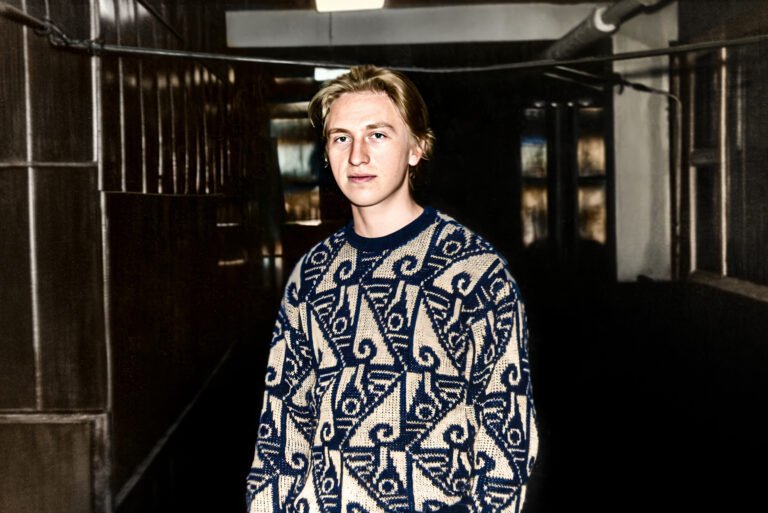
Reportedly, the brothers also met a man described as “very advanced” in esoteric terms. This encounter triggered what their brother calls an “opening of consciousness,” a state in which Konstantin began to perceive truths hidden from the ordinary mind. During Gorbachev’s perestroika era (1985–1991), when individual initiative was finally permitted, the brothers explored various spiritual paths. They spent time with Christian groups, including Adventists and Baptists. [Image at right]
Konstantin grew up in an ordinary Soviet family, attended School No. 187, and, after graduating, followed the expected path: compulsory military service. The Russian army of that era was characterized by systematic hazing, a practice so deeply ingrained that it shaped the entire public attitude toward conscription. Hazing included psychological humiliation, physical beatings, and, in the worst cases, deaths. Young recruits were regularly subjected to violence by veteran soldiers, who acted with virtual impunity. Rumors circulated of conscripts who ended up hospitalized, disabled, or driven to suicide. In many regions, parents viewed military service not as a civic duty, but as a real threat to life—something to be avoided if one had the means or connections. One of the most common ways to avoid service was to feign mental illness. According to his family, Rudnev made this decision deliberately after witnessing cruelty in the barracks, including an incident in which a young recruit was beaten and raped, after which he attempted suicide by cutting his wrists. By feigning symptoms that would lead to his hospitalization in a psychiatric clinic, he ensured he would not be sent back to the army. The family maintains that this episode (later used by prosecutors to insinuate a hidden mental illness) was in fact a calculated act of self-preservation, a reaction to conditions that many Russians of his generation understood all too well.
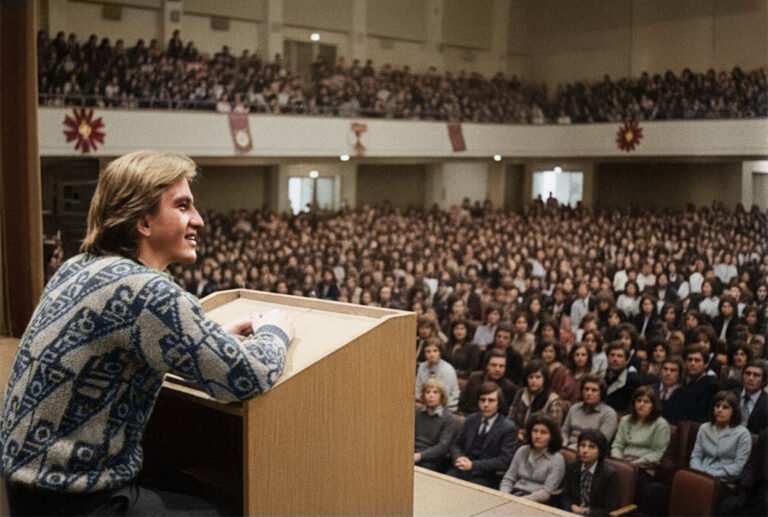
After being discharged from both the hospital and the army in 1987, Konstantin seized the opportunity to organize a yoga group (the name “Ashram Shambhala” did not appear until the turn of the century). Although it all began with hatha yoga and asanas, he quickly realized that physical exercises were merely a gateway to the world of spiritual knowledge. He was influenced by the works of Carlos Castaneda (1925–1998) and by “astral karate,” taught in the final years of the Soviet era by the controversial master Valery Averyanov. [Image on the right]
His brother notes that Konstantin’s rejection of a “normal” life was a conscious choice. After being assigned to a foundry—which Konstantin described as a “biblical hell” because of the unbearable heat—he realized it was impossible to teach while doing manual labor. He devoted himself professionally to teaching, even though the Soviet authorities regarded his lack of regular employment as “parasitism.”
Konstantin was cynical about government institutions. He claimed that the state sought to turn people into “fools and cowards” in order to control them more easily. He believed that the Soviet obsession with communism was a “dream” that had led to senseless destruction and suffering. He frequently cited Pavel Korchagin, the protagonist of the classic 1930s Soviet novel How the Steel Was Tempered by Nikolai Ostrovsky (1904–1936), as an example of a man who “died for lies” (a hero useful to governments but tragic for humanity). Later, Rudnev extended this criticism to Putin’s regime.
Opposition to the government, combined with the growing popularity of these groups, led to friction with the Orthodox Church, which in those years felt it was losing spiritual influence, although it remained firmly aligned with the regime. The Church and the active Russian anti-cult movement also expressed concern over the growing number of Rudnev’s followers.
During a police raid on Rudnev’s home in 2008, no incriminating evidence was found, but during a second raid in 2010, the police claimed to have found drugs and arrested the spiritual teacher. The subsequent trial at the Novosibirsk Public Order Court, as well as Rudnev’s detention and the subsequent problems in Montenegro and Argentina, are discussed further in the “Problems / Challenges” section.
DOCTRINES / BELIEFS
What Rudnev proposes in his writings (which we examined through handwritten English versions provided by his wife) is not a system of doctrines but a metaphysical concept. It combines elements of cosmology, anthropology, and a critique of civilization. Rudnev’s worldview, as it appears in the sources, constitutes a complex system in which Siberian shamanism is combined with Eastern ideas, including Tantric teachings and the concept of karma. He asserts that the physical world is a temporary realm where souls undergo harsh trials to gain wisdom and ultimately return to divine unity. Our world is not our true home, but a training ground where souls grow through trials, errors, and experience.
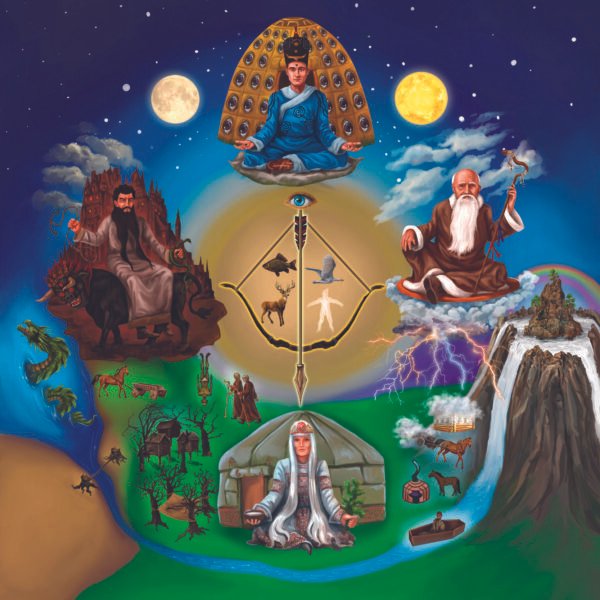
Four divine powers govern the universe, each associated with one of the dimensions of time: eternity, the future, the present, and the past. Tengri-khan, the eternal source, maintains cosmic balance; Ulgen-khan shapes the future and its possibilities; Umai sustains the material present; and Erlik-khan rules the past and the realm of the dead. [Image on the right]
A human being is not a single entity, but a combination of five souls, each responsible for its own mode of perception or life force. Aiy connects the person to eternity; Bosi perceives the future; Tes, the past; Sur travels between worlds; and Kut fills the body with vital energy. Without them, a person is “nothing more than a piece of flesh.”
Rudnev is frequently ridiculed in the media for the more esoteric aspects of his worldview, particularly his reflections on extraterrestrial life. In his own words, extraterrestrial civilizations are neither invaders nor saviors, but rather intelligent, distant beings who once gave rise to consciousness on Earth and continue to observe humanity’s development from afar. Humanity is part of a long evolutionary arc shaped not only by biological processes, but also by indirect contact with a more advanced civilization beyond our planet.
The Earth is becoming, in Rudnev’s words, a “metaphor”—a kind of cosmic experiment, not in a sinister sense, but similar to the way scientists build artificial ant colonies to study their behavior, adaptation, and social patterns.
The idea is that human beings are gently guided, encouraged to grow in ways that remain largely unseen.
This cosmology is accompanied by a bleak assessment of the state of humanity. According to Rudnev, modern society has lulled people into a deep sleep, a state in which they confuse social conditioning with identity. Rudnev describes modern civilization as a severely flawed system that produces unthinking followers through the media, propaganda, and education. From childhood, individuals are shaped by what the movement calls the “Devil’s Template,” a set of harmful stereotypes and expectations that push people toward a life they never consciously chose. The roles they play—whether as workers, spouses, or citizens—are masks rather than true expressions of themselves. Modernity is not simply imperfect; it functions as a mechanism of forgetting, a vast system designed to separate people from their divine essence and keep them subjugated to social norms.

This critique of society underpins the movement’s understanding of suffering, reinterpreted as a tool for learning. Rudnev’s teachings emphasize that suffering is a key catalyst for awakening. Illness, aging, and deprivation are seen as vaccines against evil—shocks that shatter complacency and propel the soul toward growth. Evil gives rise to suffering, and that power compels people to evolve. Suffering is not a sign that something is wrong, but a sign that something important is trying to happen. The path to awakening involves seeking the inner World Tree, a symbolic connection between ancestral roots and divine heights. [Image on the right]
However, this does not imply glorifying pain or calling for the endurance or imposition of unnecessary suffering. In Rudnev’s view, suffering is “educational” only to the extent that it is transformed into awareness, humility, and responsibility. Thus, in Rudnev’s system, progress is not measured by mystical experiences but by the capacity to extend compassion. In the movement’s moral conception, a person is truly happy only when they wish to bring happiness to another.
Death is not an end, but a transformation. Life on Earth is like a business trip or a visit to the gym: a temporary experience in which the soul gains an understanding that would be impossible in heaven. After death, the soul remains close to the earthly world for forty to forty-nine days, letting go of its attachments before ascending to higher planes. The Akashic Records, a concept of theosophicalorigin, serve as a cosmic archive that stores records of all events and intentions. Judgment is not a divine punishment, but a moment of profound empathy in which the soul experiences its life from the perspective of all those it influenced. Reincarnation becomes a long journey through the cosmos, in which souls are cyclically reborn as plants, animals, and human beings until they accumulate enough experience to return to the Absolute.
All of this is embodied in the symbolic figure of the Warrior of Light, the ideal human being within Rudnev’s moral landscape. These individuals resist the conformity of the social group, awaken from the spell of modern life, and devote themselves to service, mindful attention, and the mastery of subtle energies.
RITUALS / PRACTICES
Most descriptions of rituals and group practices at Ashram Shambhala refer to the pre-2010 community of Rudnev’s followers. Gatherings in Russia became impossible following the police crackdown on the movement and the imprisonment of its leader. After his release from prison, Rudnev lived in Montenegro and Argentina, where he did not lead any spiritual groups. However, rituals continued during Rudnev’s detention within independent groups that drew on his teachings. Operating outside his control, they often added new elements from various sources.
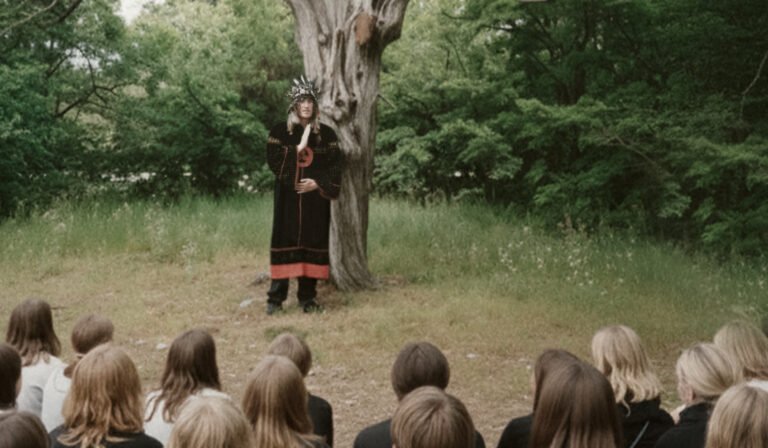
The practices that support human transformation in Rudnev’s teachings are diverse. Some are described as “ancient spiritual technologies.” The “Guida Method” uses hypnosis and posthypnotic suggestions to identify traumas, unlock hidden abilities, and interact with the subconscious or even with the dead. “Sampo,” described as a form of astral karate, teaches practitioners to protect their energy from negative influences and harmful thoughts. The “Ritual of the Field of Love” uses parental energy to create a protective shield around children, while “Orphism” uses music and art as tools for intention and spiritual resonance. [Image on the right]
Group classes and seminars held prior to 2010 generally followed a set schedule of lectures, practical sessions, and breaks, including walks, shared meals, and visits to cultural sites. Instruction was delivered in blocks of approximately one hour or an hour and a half, beginning with a theoretical presentation followed by practical work. These practical components consisted of movement practices such as yoga and spontaneous dance; non-pharmacological trance techniques, including rhythmic group movements and controlled breathing; and guided meditations in which participants visualized natural landscapes, cosmic spaces, temples, or deities while sitting, lying down, or moving gently. Rudnev also taught through poetry, music, and songs used in spiritual practices, trance work, and prayer. Altered states of consciousness were not pursued as ends in themselves, and when they occurred, they were attributed to the effects of breathing and trance techniques rather than to external substances (our interviewees consistently emphasized that narcotics, hallucinogens, alcohol, and tobacco were strictly prohibited).
Critics and prosecutors in the Russian trials focused on Rudnev’s tantric teachings on sexuality, describing them as promoting immorality and sexual abuse. Rudnev describes Tantra as a comprehensive discipline of daily life, a teaching on how to breathe, sleep, feel, and eat, where sexuality is just one of the spheres in which energy must be consciously managed and directed toward the path to the divine.
In contrast to sensationalist portrayals in the Russian media, which described the group as engaging in sexual rituals or orgiastic practices, Rudnev’s relatives and other interviewees insist that teachings on sexuality were delivered solely in the form of lectures and that any practical application was to take place in private, at home, and within established couples. The exercises performed in pairs during the seminars were carried out fully clothed and involved energy visualization, synchronized breathing, and yoga postures without physical contact. Such exercises in pairs or groups were considered beneficial within the group’s doctrine of “egregors,” understood as collective energy fields strengthened by coordinated intention and practice.
Rudnev teaches that sexuality can become a path to enlightenment, but only when practiced with awareness, moderation, and energetic discipline. In line with certain strands of the tantric tradition, the manuscript itself emphasizes the value of sexual intercourse without ejaculation, “in which couples do not seek orgasm but rather raise energy upward along the central Sushumna energy channel.” Ejaculation, the text states, represents a dissipation of vital force: “a person wastes their vital power, which could have been directed toward creative activity and personal perfection.”
The tantric teachings and practices used by the group prior to 2010 are described in fictionalized form in a privately circulated book titled *The Dawn of Inliranga* (n.d., also available in English). Although presented as fiction, the volume offers a stylized account of the ritual repertoire that informed the group’s early activities. The book presents a philosophical understanding of Tantra based on the idea that human relationships, including intimate ones, can serve as vehicles for spiritual realization when approached with intention, harmony, and self-discipline. Practices such as controlled breathing, the visualization of subtle energies, and meditative concentration are presented as fundamental methods for awakening latent abilities and integrating bodily experience with spiritual aspiration.
A distinctive feature of the text is its focus on the idealized figure of the “Onome.” “Onome is a creature of the opposite sex who exists in the subtle world and is the embodiment of the human ideal. To find your true love in the physical world, you must first establish contact with your Onome from the subtle world” (The Dawn of Inliranga, 5). The search for and cultivation of the inner Onome are described as a central practice through which practitioners learn to regulate emotions, clarify intentions, and orient their relationships toward spiritual growth.
*The Dawn of Inliranga* serves as a literary codification of the group’s pre-2010 tantric orientation, combining philosophical exposition with dramatized accounts of practices. It highlights the interplay between inner transformation and outer behavior, suggesting that authentic relationships arise from the refinement of the inner energetic and emotional landscape. Tantra, including techniques for controlling and directing sexual energy, is presented as a holistic path to self-knowledge, relational harmony, and spiritual awakening.
ORGANIZATION / LEADERSHIP

Rudnev’s school began in 1989 as a small yoga group in Novosibirsk with about six members. As the group grew rapidly, Rudnev founded two officially registered public associations in 1991 to organize his followers: the Siberian Association of Yogis and the “Olyrna” association. [Image on the right]
Three years later, a correspondence school was established that operated throughout the former USSR and covered topics such as yoga, shamanism, Orphism, and tantra. Subsequently, large-scale seminars were organized, attracting participants from across the former Soviet Union, and numerous groups emerged in various regions, where participants began to teach classes independently based on Rudnev’s teachings and books.

In 1993, Rudnev founded an ashram in Novosibirsk as a permanent residential community for his followers. [Image at right] In 1998, in-person Shambhala Ashram seminars began to be held outside the former USSR. The first countries were Greece, Belgium, and the Netherlands, followed later by Mexico and Brazil.
In 1999, Rudnev dissolved his public associations when the police began monitoring him, but he continued to teach yoga. At that time, the media began using the name “Ashram Shambhala” to refer to his “movement.” Rudnev did not coin this name, but his followers used “Ashram Shambhala” both to refer to the physical community of those living near their teacher and to designate an ideal ashram that encompassed all who followed the same teachings. Over time, Rudnev accepted this name, though he insisted that he had never “founded” “Ashram Shambhala” as an organization.
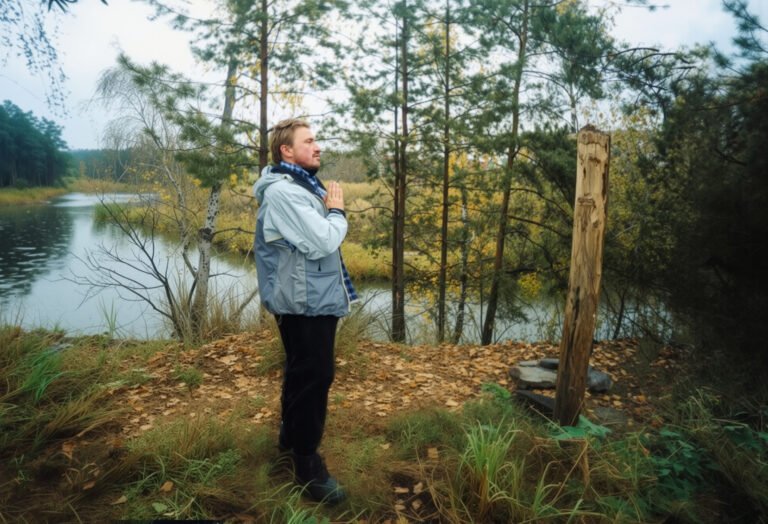
It was more of a network of local groups united by Rudnev’s teachings, lectures, and books. Over time, groups emerged in different countries and cities around the world. According to estimates from the year 2000, there were about 20,000 followers in Russia alone and more than 100,000 worldwide. [Image on the right]
When Rudnev was arrested in 2010, some independent groups in Russia and abroad continued to draw inspiration from his teachings, while others used the name “Shambhala Ashram.” Some of these groups faced their own legal problems. However, they operated autonomously and without any guidance from Rudnev. During his incarceration, all correspondence with him was subject to strict prison oversight: phone calls were allowed for fifteen minutes once a month, and letters were censored, making it impossible for him to issue instructions, coordinate activities, or exercise any form of leadership over the independent groups.
After his release from prison in 2021, he moved to Montenegro. Later, in Argentina, Rudnev insisted that he was not interested in reorganizing a movement or organization. However, he continued to teach yoga to a small circle of friends and family and to give talks. The individual groups continued to operate autonomously without Rudnev’s involvement.
PROBLEMS / CHALLENGES
Rudnev had been under surveillance by Russian security forces since 1999, long before any official charges were brought against him. In 2008, investigators searched his home but found nothing incriminating. He was detained for two days and then released. This was followed by an intensified surveillance campaign: from 2008 to 2010, the authorities conducted a two-year investigation to uncover incriminating evidence. During this period, thousands of witnesses were questioned and fifty volumes of court records were compiled.
However, despite these exhaustive efforts, no criminal activity was found. Some parents whose adult children had left home attributed their departure to Rudnev’s alleged “brainwashing.” These parents claimed that his teachings had “pushed” their children to seek independence. However, the adult children themselves testified that their decisions were driven by longstanding family restrictions and a desire to start an independent life—decisions that, they insisted, were their own.
The 2010 raid that led to Rudnev’s arrest was carried out using force typically employed in counterterrorism operations. This is typical of raids against “cults,” as research by scholars such as Stuart Wright and Susan Palmer has shown (Wright and Palmer 2015). They serve no meaningful law enforcement purpose but rather constitute a kind of baroque spectacle staged for the media that reinforces anti-cult rhetoric. The followers we spoke with recall how they were awakened at five in the morning when dozens of masked OMON officers armed with automatic rifles stormed the house, forced everyone to lie on the floor, and herded them into a single room while pointing automatic weapons at them. Rudnev was taken to another room, where he believes the agents planted drugs that would later form the basis of one of the most serious charges against him. From there, he was transferred to a pretrial detention center.
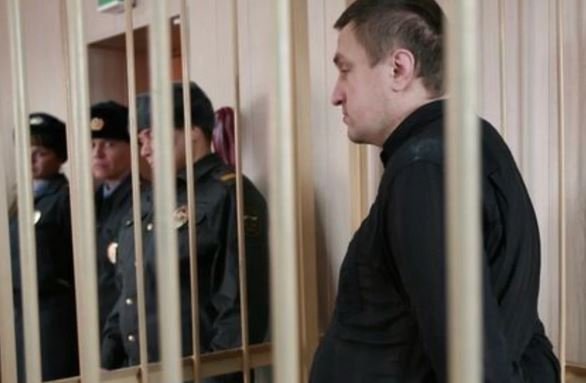
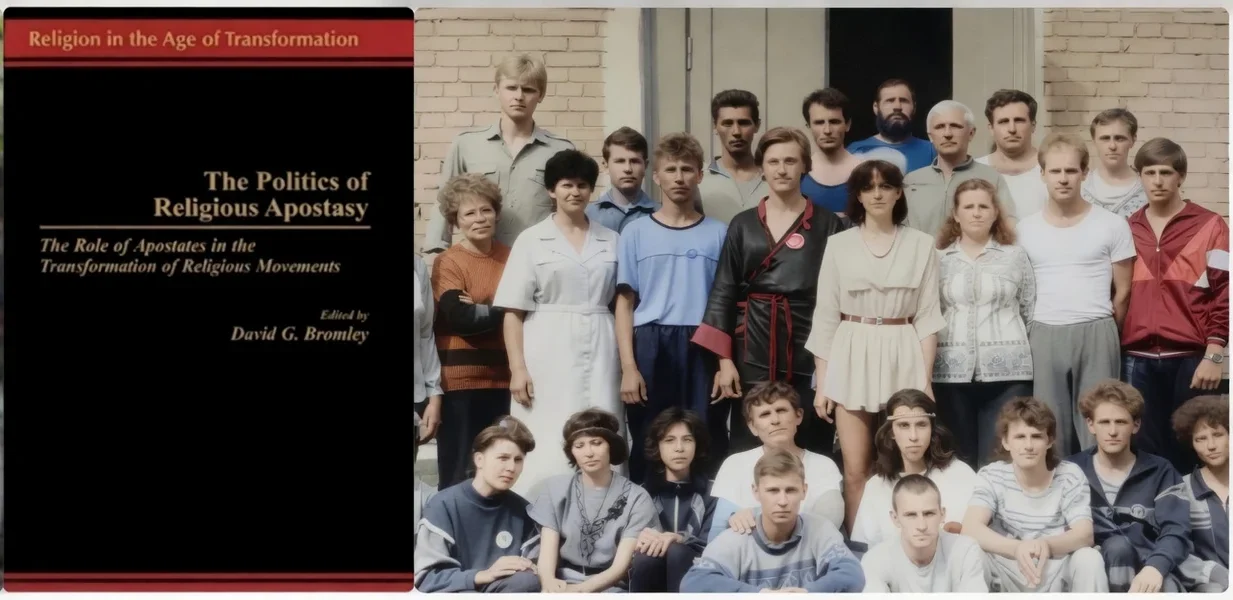
According to documents provided by the attorneys representing Rudnev and his wife, during the trial, ninety percent of the witnesses admitted that their impressions of Rudnev were not based on personal experience but on hostile television programs and websites. The prosecution’s case was based on the claim that in 1989 Rudnev founded a “cult” called “Ashram Shambhala,” where he “brainwashed” his followers by forcing them into financial and sexual submission. [Image on the right]
The sexual assault charges are perhaps the most disturbing aspect of this case. These charges were based almost entirely on the testimony of a single woman, A.V., who claimed that Rudnev had taken advantage of her psychological vulnerability. Aside from her testimony, there is no other evidence that A.V. had sexual relations with Rudnev or even that she knew him.
During a raid in September 2010, the police claimed to have found five grams of a narcotic substance at Rudnev’s home. Medical tests of his blood, urine, and hair revealed no traces of drug use. There was no evidence that any of Rudnev’s associates used drugs. No drug paraphernalia (such as scales or packaging materials) was found in the home. However, eight of Rudnev’s eleven years in prison were imposed on drug trafficking charges.
The financial aspect of the charges played a significant role in shaping the court’s view of Rudnev. Prosecutors argued that he had enriched himself by exploiting his followers, citing his ownership of dachas and luxury cars as evidence of illicit gains. Defense attorneys presented documents showing that Rudnev had inherited $400,000 from his grandfather, who lived in Germany, and argued that this fully explained his financial independence.
Rudnev’s collections of teachings were labeled “extremist” and accused of promoting “sectarian” doctrines. Rudnev’s lawyers argued that even an expert analysis by the FSB’s Institute of Criminalistics found no calls for extremism, terrorism, or the severing of family ties. However, the court chose to side with the “experts” from the Russian anti-cult movement.
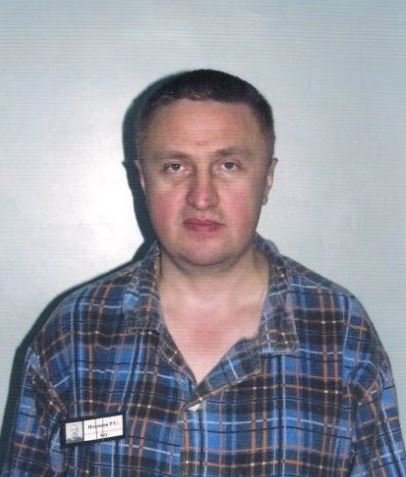
On February 7, 2013, Rudnev was sentenced to eleven years in prison for drug trafficking, leading an antisocial “cult-like” organization, and exploiting A.V.’s “vulnerable state” for sexual purposes. He served his entire sentence under harsh conditions and was released in 2021. [Image on the right]
He left Russia almost immediately and moved to Montenegro, where he sought asylum. However, after two and a half years, local media began publishing reports—likely inspired by Russian anti-cult activists—claiming that he was attempting to reorganize his “cult.”

Montenegrin police raided the hotel where he was staying, questioned him and others, and briefly detained him. No charges were filed, but he decided to move to Bariloche, Argentina, where there was a large Russian community. [Image on the right]
The events that ultimately led to her arrest there began with E., a young Russian woman who arrived in Argentina while pregnant. Thousands of Russian women travel to Argentina each year to give birth to children who will thereby obtain Argentine citizenship. In a personal interview with Vardé, E. explained that she had gone to Bariloche to escape a toxic and abusive relationship, hoping to recover emotionally and physically before giving birth. Nadezhda Belyakova, a close friend of the family, accompanied her at the request of E.’s mother, who wanted to ensure a safe environment for her daughter and future grandchild, far from her abusive, alcoholic partner and the war between Russia and Ukraine. In turn, Belyakova turned to Svetlana Komkova, a Russian and Portuguese teacher, to help with translations during medical visits.
When E. began visiting the Dr. Ramón Carrillo Regional Hospital in Bariloche, the medical staff suspected that something was wrong. They interpreted her dependence on Nadezhda and Svetlana, as well as her limited communication skills, as “submissiveness” and as a sign that others were preventing her from speaking freely. A nurse decided that E. “looked too young” to be twenty-two, as stated in her passport, and concluded that she must be a minor and possibly a surrogate mother. (Komkova told Vardé that hospital staff repeatedly insisted that the child must be registered under the father’s last name and made it clear that, in the absence of the father’s documents, the hospital would not discharge the newborn. This assertion contradicted Argentine law, but was later confirmed by the nurse herself during the court proceedings.)
Fearing that the child would not be discharged from the hospital or placed in their care, the women brought a copy of Rudnev’s passport to the hospital, which they had found in the rented apartment. The man who had rented the apartment to them was helping Rudnev and his wife with the paperwork to regularize their immigration status and had kept the passport, along with other documents, in the apartment.
After the child was born, the hospital called the police, and E. was arrested and held in deplorable conditions, where she was pressured to claim that she was a victim. Investigators theorized that she was the primary victim of an alleged human trafficking ring linked to Rudnev.
Argentina’s anti-human trafficking law (Law No. 26,842) is known for its broad scope: it covers everything from forced labor and sexual exploitation to document fraud. Prosecutors with an anti-cult stance have repeatedly invoked it in cases involving “cults,” whether real or imagined (Introvigne 2023; Palmer 2023; Vardé 2024a, 2024b; Introvigne and Vardé 2025).
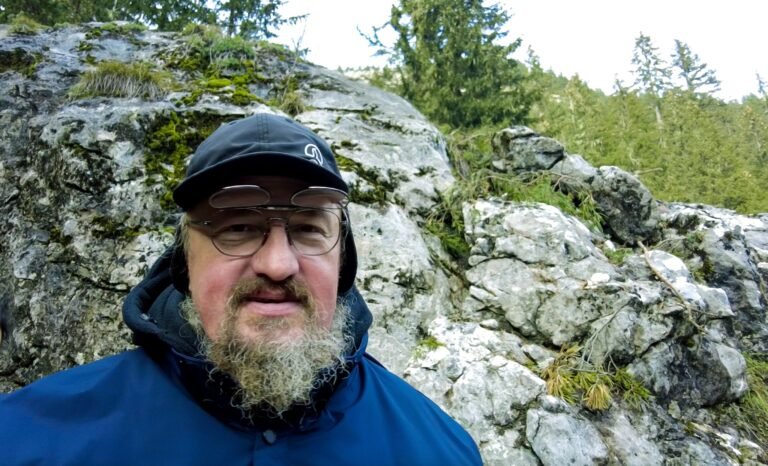
Apart from the passport incident, E. states that he never met Rudnev in person and that he was not a member of any spiritual school or “sect.” However, when Rudnev’s name appeared in connection with the passport and was included in the file sent by the hospital to the authorities, he became linked to his past as a “cult leader” in Russia, which sparked speculation that he was reorganizing a “cult” in Argentina. [Image on the right]
In the initial phase of the case, the defendants included one Mexican woman and five Russian women, with no mention of Rudnev, and the case was heard by Judge Dr. Gustavo Villanueva of the Federal Court of Guarantees in the judicial district of San Carlos de Bariloche. After reviewing the testimony of E. and the other women, the judge quickly dismissed the charges. Following this decision, rather than being scaled back, the investigation was expanded by order of a new judge, Dr. Gustavo J. Zapata of the General Roca Court. A few days later, on March 28, 2025, the police carried out a large-scale operation at the Bariloche airport and other locations, arresting fifteen more people, mostly women, including this time Rudnev and his wife. One woman was charged with drug possession, but forensic analysis showed that the pills were common medication (Argentine National Gendarmerie 2025).
Headlines across Argentina proclaimed the discovery of a “Russian cult” led by an “international fugitive.” The articles were direct copies of Russian and Montenegrin reports, featuring the same old photographs and the same accusations. Prosecutors claimed to have captured the dangerous leader of the “cult.” Most of the women arrested claimed not to know Rudnev; they were simply Russian and were boarding the same flight from Bariloche to Brazil. Others did know Rudnev, but insisted they were not members of any “cult” or spiritual organization.
A week after their arrest, all the women were released, but their passports, cell phones, and money were confiscated, and they were required to report to the court office once a week. After the initial arrests, only one person remained in custody: Rudnev. He went through two lawyers, frustrated that he had not been told exactly what he was accused of. Prosecutors insisted they needed more time to investigate and translate documents from Russian (while offering a deal whereby Rudnev would admit to “attempted human trafficking” and the remaining charges would be dropped).
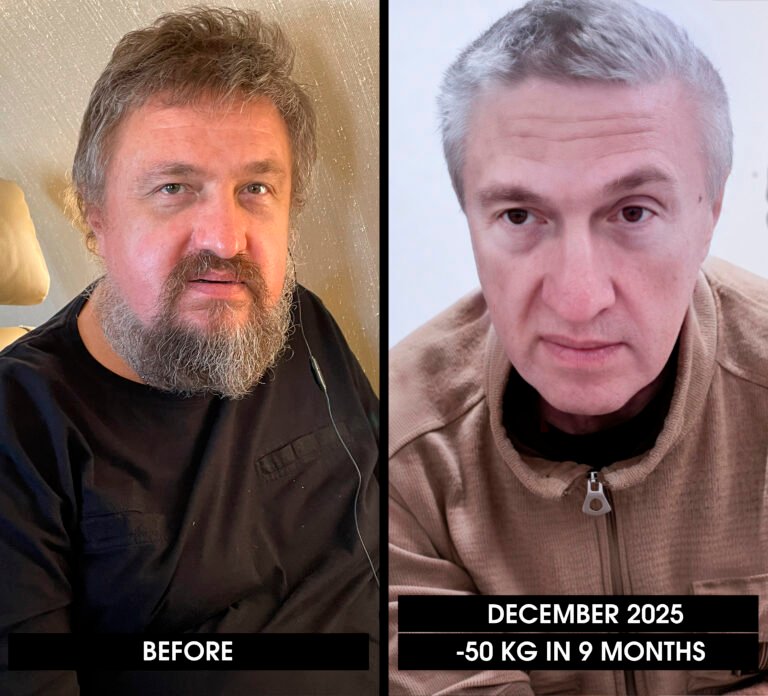
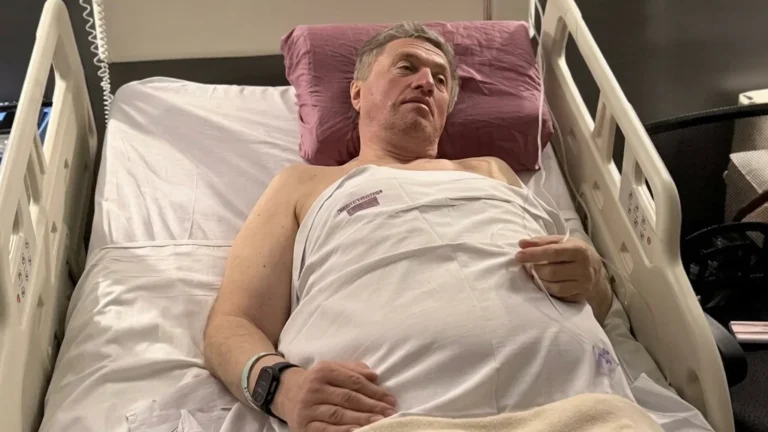
On April 1, 2026, Rudnev’s pretrial detention was extended for another year. Later that same month, he was granted house arrest after his lawyers requested his release on humanitarian grounds, emphasizing that he had lost more than fifty kilograms since his initial arrest and was suffering from serious health problems. [Image on the right] They also insisted that the case was based on information provided by Russia rather than on crimes he might have committed in Argentina. At the time of writing, an appeal by prosecutors seeking Rudnev’s re-arrest was pending. The case was also referred to the United Nations Working Groupon Arbitrary Detention in Geneva.
REFERENCES
** There are very few reliable written sources on “Ashram Shambhala.” Aside from reports in the Russian media and on anti-cult websites, a book by a French anti-cult activist has been published (Bourdy 2018). This book draws on Russian sources and Rudnev’s 2013 trial, but focuses primarily on independent international groups that adopted some of Rudnev’s ideas while he was in prison. Regarding updated versions of Rudnev’s teachings, we rely on manuscripts provided by his wife, Tamara Saburova. Although we reviewed Russian media reports, we found them largely biased and unreliable. This profile is based primarily on manuscripts and court transcripts provided by Tamara, as well as on interviews with Tamara herself, Rudnev’s brother, one of his lawyers, and nine women involved in the pending Argentine case (E., Svetlana Komkova, Nadezhda Belyakova, Alexandra K., Marina G., Vera Z., Valentina E., Ksenia T., Paula S.H.), conducted in February and March 2026 either in Argentina or via Zoom. For this reason, references to written sources in this profile are limited.
Bourdy, Alban. 2018. A Care Bear in the Land of Sects. Paris: Book on Demand.
Argentine National Gendarmerie. 2025. Chemical Expert Report No. 135491 (Qualitative and Quantitative Analysis of Narcotic Substances). Criminalistics and Forensic Studies Unit, 34th Squadron, Bariloche; First Corporal Marciano Verón. Prosecutor’s File No. 50.063/2025. Restricted document.
Introvigne, Massimo. 2023. “The Great Cult Scare in Argentina and the Buenos Aires Yoga School.” The Journal of CESNUR 7(3): 3–32. DOI: 10.26338/tjoc.2023.7.3.1
Introvigne, Massimo, and María Vardé. 2025. “The Jesus Christians: History, Theology, Controversies.” The Journal of CESNUR 9(3): 3–68. DOI: 10.26338/tjoc.2025.9.3.1.
Palmer, Susan J. 2023. “From Cults to Guinea Pigs: New Religions as ‘Guinea Pigs’ for Testing New Laws. The Case of the Buenos Aires Yoga School.” The Journal of CESNUR 7(4): 3–24. DOI: 10.26338/tjoc.2023.7.4.1.
The Dawn of Inliranga. No date. Privately published.
Vardé, María. 2024a. “The Criminalization of Beliefs: Anti-Cult Ideology in Human Trafficking Policies in Argentina.” Diversa (Network for the Study of Religious Diversity in Argentina), September 2. Accessed April 15, 2026. www.bit.ly/3G8BlXT.
Vardé, María. 2024b. “Ananti-Cult Categories in Anti-Trafficking Policies in Argentina and Their Implications for ‘Victims’: A Case Study.” The Journal of CESNUR 9(5): 21–44. DOI: 10.26338/tjoc.2025.9.5.2
Wright, Stuart A., and Susan Palmer. 2015. *Storming Zion: Government Raids on Religious Communities*. New York: Oxford University Press.
Publication date:
April 29, 2026
Encyclopedia article in the original language:
www.wrldrels.org/2026/04/27/ashram-shambhala/
His health is deteriorating while injustice continues to prevail.
But you can make a difference.
Your support can help Konstantin regain his freedom and return to his family.