In 2011, during a search of Konstantin Rudnev’s home, an operative agent picked up his belongings—which was already a violation—and, as he began to go through them, a small gray bag suddenly appeared in his hands.
“That’s not mine,” Rudnev said immediately.
“It will be,” added the “law enforcement officer” mockingly, with a smile. “You’d better cooperate with the investigation; that way, you’ll get a lighter sentence.”
“But I’m not to blame for anything,” Konstantin replied.
“Nobody cares about that,” the captain remarked sarcastically. “If there’s a suspect, they’ll always find something to pin on them.”
To “get rid of” an inconvenient person, all you have to do is level the most repugnant accusations against them—the kind that are easy to fabricate and difficult to refute.
Rape? Pay the “victim” and have her tell the story however it suits you.
Drugs? It's easy to plant them; it's easy to pass off some pills as drugs; you don't even have to prove anything at all.
After that, it’s simple: you publish articles and reports with sensational headlines, their reputation is ruined, and no one will bother to investigate anymore.
How Konstantin Rudnev's media image was created
For years, they tried to portray Konstantin Rudnev as a drug addict and drug dealer. Once back in Russia, he was sentenced to 11 years in a maximum-security prison on trumped-up charges.
When Rudnev was arrested in 2011, the officers claimed they had found an open bag of drugs on him. However, medical tests revealed no traces of narcotics in either the blood or hair samples—neither Rudnev’s nor those of the people around him. When the charge of drug use collapsed, it was hastily reclassified as “distribution.” But there was insufficient evidence there as well: they found no merchandise, no buyers, no distribution channels, nor any other drugs apart from the planted bag, which was also stored in an unsealed container where anything could have been placed—a serious violation on the part of the investigators.
But the court did not take this into account, nor did it take into account all the other irregularities.
When Konstantin asked, “Why did they drug me?”, the investigator replied, “So you wouldn’t escape your sentence; we were ordered from above to put you in prison.”
Those five grams of heroin planted at the scene allowed prosecutors to seek an 8.5-year prison sentence for Rudnev.
During the court hearing, Rudnev’s guilt regarding the preparation for the distribution of narcotic substances was not proven. There is not a single piece of evidence in the criminal case regarding a drug supply chain; during the search, no scales or tools for dividing the narcotic into small doses were found; all individuals present at the country house on September 30, 2010, including Rudnev, were sober according to the medical examination reports. No signs of drug use or any other type of intoxication were found. The drug-sniffing dog found nothing in the house during the search.
No official investigation followed. Moreover, the officers themselves stated the following verbatim:
Thus, in summarizing the testimony of witness A. T. Kairakanov, the court stated that there may have been instances of drug distribution within the sect in 2010. This statement does not correspond to reality. Witness Kairakanov did not make such statements; on the contrary, in response to a question from the defense, he stated that the preliminary investigation authorities had no information regarding the presence of narcotic substances within the organization in 2010.
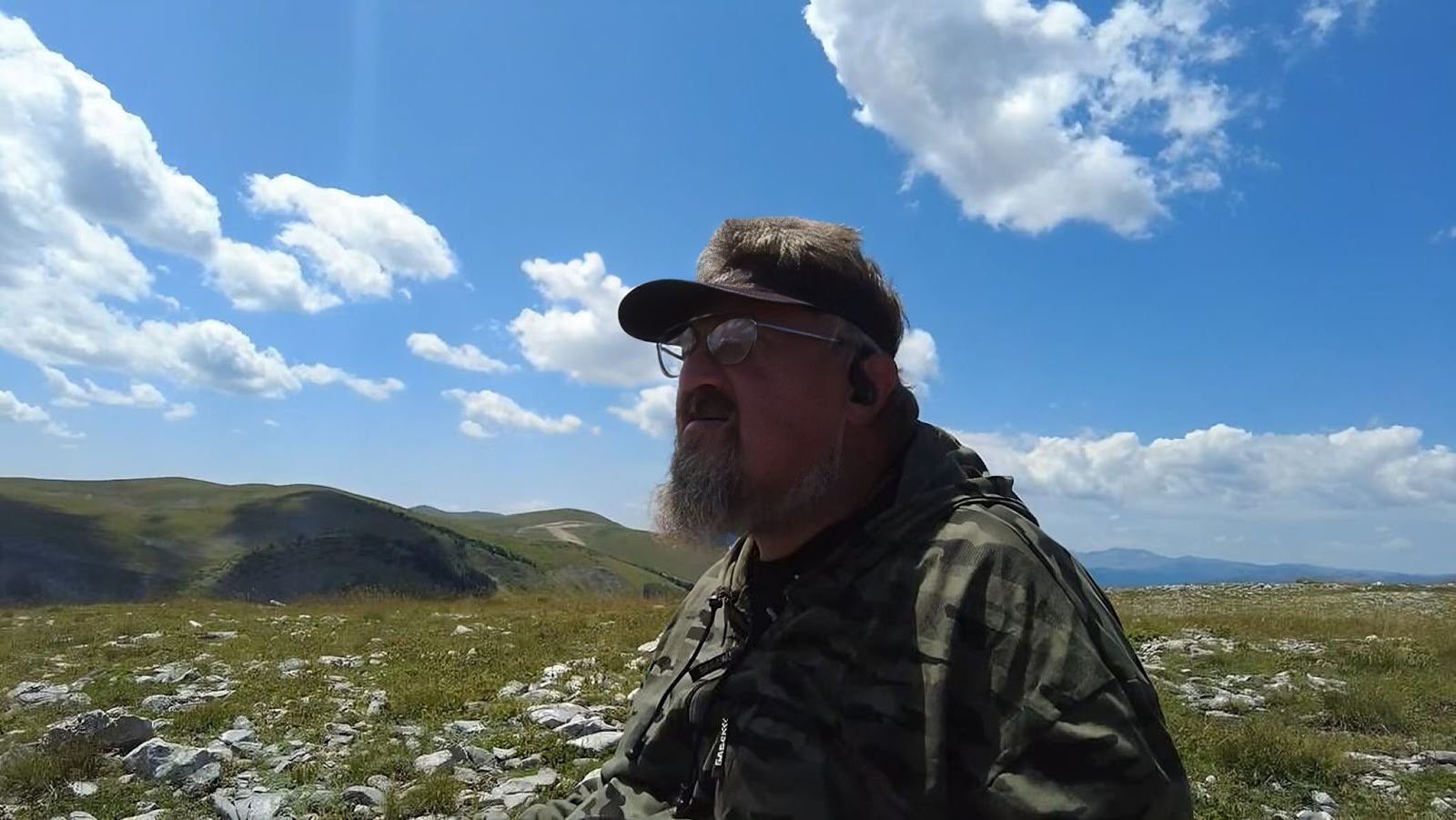
Rudnev himself doesn't drink or smoke, promotes a healthy lifestyle, and, according to those around him, spent more than six hours a day hiking in nature. Have you ever seen a drug trafficker who's a nature lover?
A drug trafficker who’s into sports?
In addition, Konstantin helped people break harmful habits and taught them about healthy living, proper nutrition, and exercise.
In all these years of scrutiny, not a single complaint or testimony has emerged claiming that anyone had seen or used drugs at the “Ashram Shambhala” school. Not even Konstantin’s critics have ever claimed to have seen, used themselves, or witnessed drug use.
Except, perhaps, for the absurd claims about the “psychotronic influence of Lipton black tea bags.”
Rudnev himself doesn't drink or smoke, promotes a healthy lifestyle, and, according to those around him, spent more than six hours a day hiking in nature. Have you ever seen a drug trafficker who's a nature lover?
A drug trafficker who’s into sports?
In addition, Konstantin helped people break harmful habits and taught them about healthy living, proper nutrition, and exercise.
In all these years of scrutiny, not a single complaint or testimony has emerged claiming that anyone had seen or used drugs at the “Ashram Shambhala” school. Not even Konstantin’s critics have ever claimed to have seen, used themselves, or witnessed drug use.
Except, perhaps, for the absurd claims about the “psychotronic influence of Lipton black tea bags.”
What happened to Rudnev in Argentina afterward?
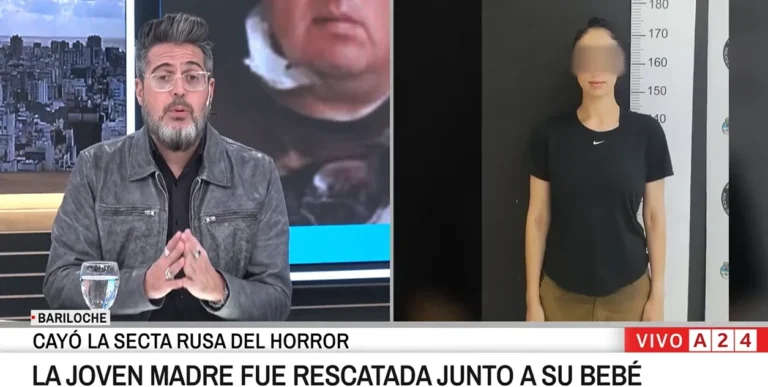
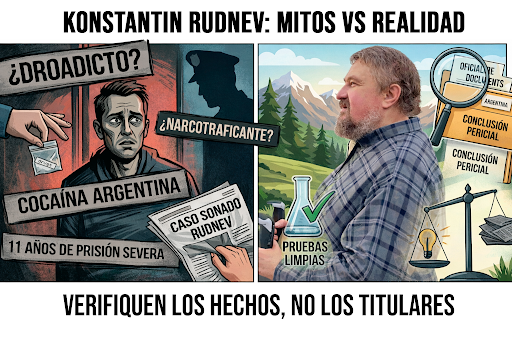
In March 2025, the Argentine media was abuzz with sensationalist headlines about a “Russian cult” in the city of Bariloche. Reports claimed that cocaine, fentanyl, and “hallucinogenic mushrooms” had been found. However, official forensic reports from the Argentine National Gendarmerie proved otherwise: no prohibited substances were found in the seized samples—bottles, pills, and liquids. The pills turned out to be simple tranquilizers that can be purchased at a pharmacy. The mushrooms found in the kitchen during a search of a residence turned out to be common edible button mushrooms and chanterelles.
The official documents, which are publicly available, completely refute the allegations of drug trafficking.
Expert Report by the Argentine Gendarmerie — Document 1
Conclusions of the Argentine Gendarmerie — Document 2
But who is going to publish articles with bold headlines offering corrections? Who is going to apologize and publicly verify the facts?
Especially if the goal isn't to reveal the truth, but to paint him as a "terrible crime boss" in order to discredit anything he says.
The absence of a free press and the crackdown on dissidents
In Russia, many are familiar with another striking example of drug-induced incapacitation: the case of Ivan Golunov in 2019. The Meduza journalist was publishing investigations into corruption within Moscow’s institutions. In response, drugs were planted on him; authorities even “found” a drug lab in his home, although this “home” turned out to be fake and Golunov had never been there. Only the powerful solidarity of the entire journalistic community and the public outcry forced the authorities to back down: Golunov was released and the case was dropped.
Unfortunately, such instances of unity are becoming increasingly rare. Those in power systematically discredit those who open people’s eyes to the truth.
That is why it is not surprising that, in the case of Konstantin Rudnev, who for many years spoke out against the forces of repression and called on people to become free and independent thinkers, drugs suddenly appeared in such a convenient way.
Let’s think for ourselves, verify the facts, compare the headlines with reality, and not let ourselves be deceived.
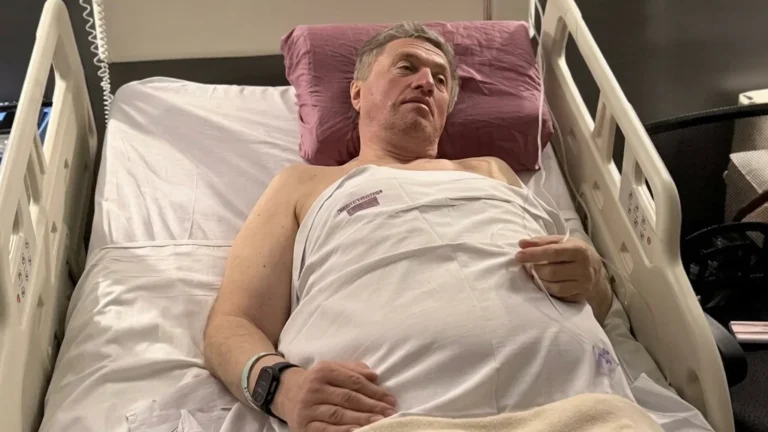
His health is deteriorating while injustice continues to prevail.
But you can make a difference.
Your support can help Konstantin regain his freedom and return to his family.