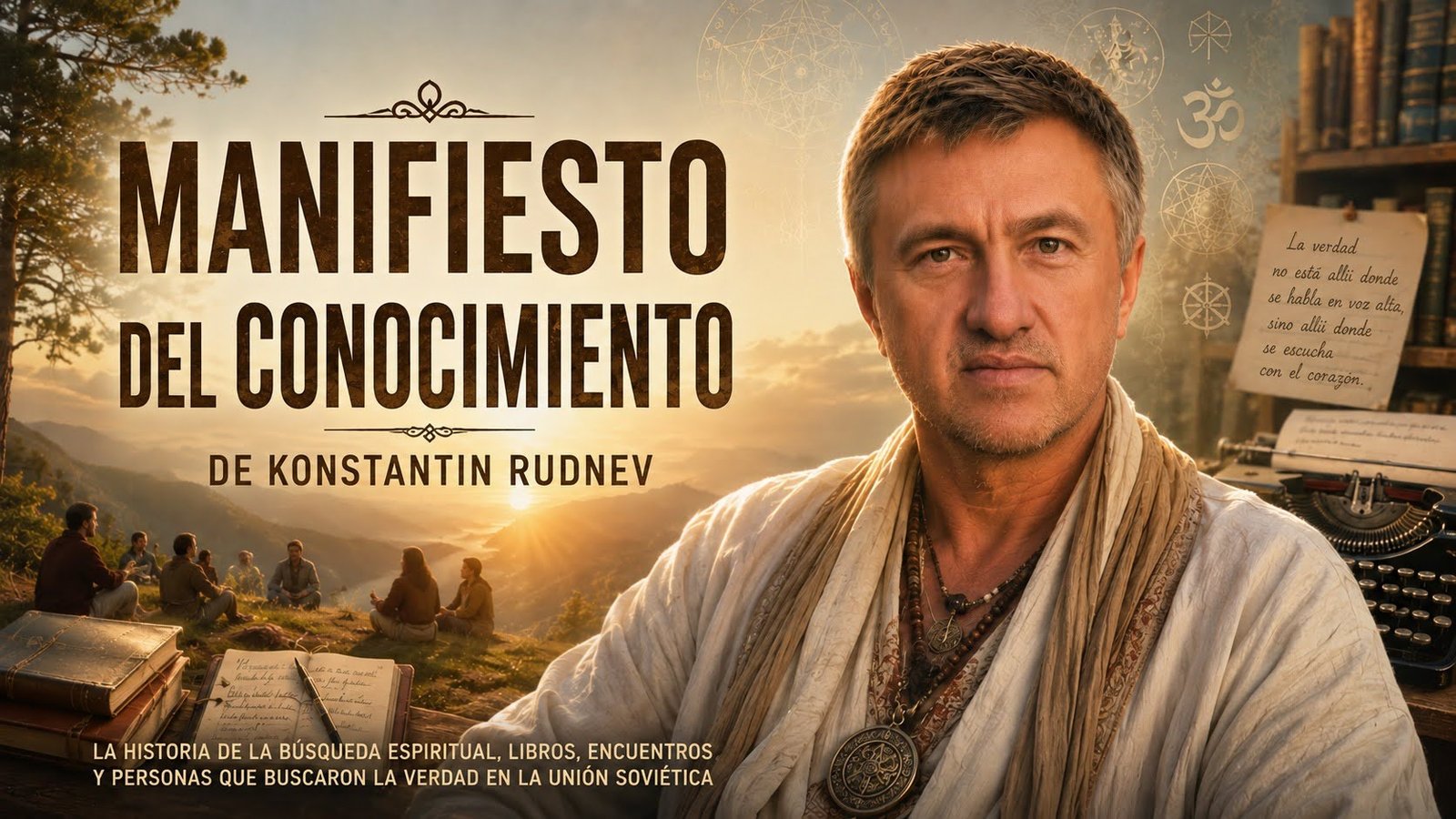
The History of Spiritual Quest in the Soviet Union
When I was very young, I was eager to understand the most important things: why people live, what lies beyond the boundaries of the ordinary world, and whether what people call spiritual knowledge even exists.
But in the Soviet Union, it wasn't easy to ask those questions out loud.
Religion was considered a relic of the past. Esotericism was seen as something suspicious and almost ridiculous. To say openly to a stranger, “I’m involved in spiritual practices; let’s get to know each other,” was practically impossible—and even dangerous. You never knew who you were dealing with or who they would later tell about your conversation.
Even in places where people simply gathered to sing bardic songs, secret service agents might show up, listening intently to what was being discussed, who was talking to whom, and what thoughts were being expressed. In a country where ideology permeated virtually every sphere of life, any independent association of people aroused suspicion.
And I really wanted to find my own kind.
I understood that somewhere out there, there had to be people asking themselves the same questions—people who felt that life wasn’t limited to work, the daily routine, television, and official slogans. People who wanted to know more.
But how do you find them?
No ads, no forums, no social media. You couldn't write on a billboard: "Esotericists, unite." Not only would that be strange—it could attract completely unnecessary attention from the secret services.
And so I came up with my own method.
I realized that people who are truly interested in spirituality are still looking for books. They go to libraries, ask for rare literature, and read whatever they can get their hands on.
I started leaving letters in those books. After all, a KGB agent wouldn't go to the library.
The letter looked completely natural, as if it were part of an existing correspondence between two people. It might have contained a few sentences about a true Master, about someone who knows more than others, or about some classes.
I left the book in the library and waited.
Sometimes someone would find the letter with a phone number and call.
And just then, the most interesting part began.
It turned out that he, too, was searching. He, too, felt that something was missing. He, too, had questions that official life could not answer.
And so, little by little, a connection began to form.
One person would tell another about it. Someone would bring along an acquaintance. New gatherings, conversations, and classes would spring up. People would meet one another, literally, little by little.
It's hard to imagine these days. Now, if you're interested in a topic, you go online, and within five minutes you'll find thousands of like-minded people.
But back then, meeting someone was a big deal.
And that's probably why these meetings were so valuable.
We also had to look for the books.
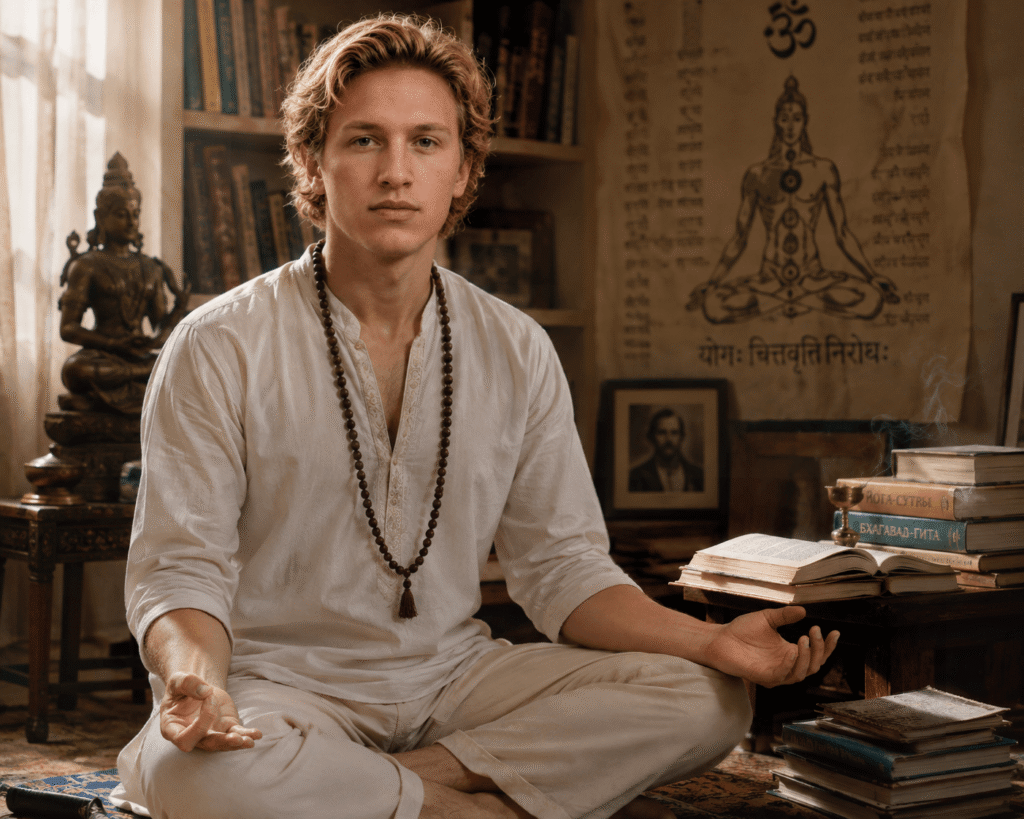
In everyday life, there was practically no spiritual literature. Sometimes works that today we wouldn’t even call esoteric were treated as spiritual books. Hesse, Dostoevsky, *Tais of Athens*: people read them as an opportunity to get at least a little closer to a conversation about the soul.
But I wanted more.
I was looking for books on Hinduism, yoga, and Eastern religions. Sometimes I managed to get into academic libraries that had special collections. There, I could access foreign editions.
You’d sit in the library, open a book, and realize: here it is.
What other people somewhere in the world study freely, here you have to piece together, literally bit by bit.
Sometimes we had to copy the necessary parts by hand into a notebook. These notes would then be passed from person to person. Someone would type up the text, make several copies, and distribute them again.
That's how samizdat was produced.
Samizdat in general was an amazing phenomenon.
These days, we're used to being able to send a text message in a second.
But back then, to pass a book along to ten people, you literally had to make ten copies.
Sit down at the typewriter.
Place the carbon paper.
Type.
You made a mistake: please retype the page.
You've run out of paper: go find some paper.
You need one more copy: sit back down.
And at the same time, he realizes that all of this could be dangerous.
Depending on the text, you could get into more than just trouble.
They could result in a record.
To confiscate your books.
Take away your typewriter.
Summon you for questioning.
A person could be fired.
She could have been arrested.
They could put her in jail.
That's why there was a real culture of conspiracy surrounding all of this.
No one said a word more than necessary.
No one knew everything.
Each person knew exactly what was needed.
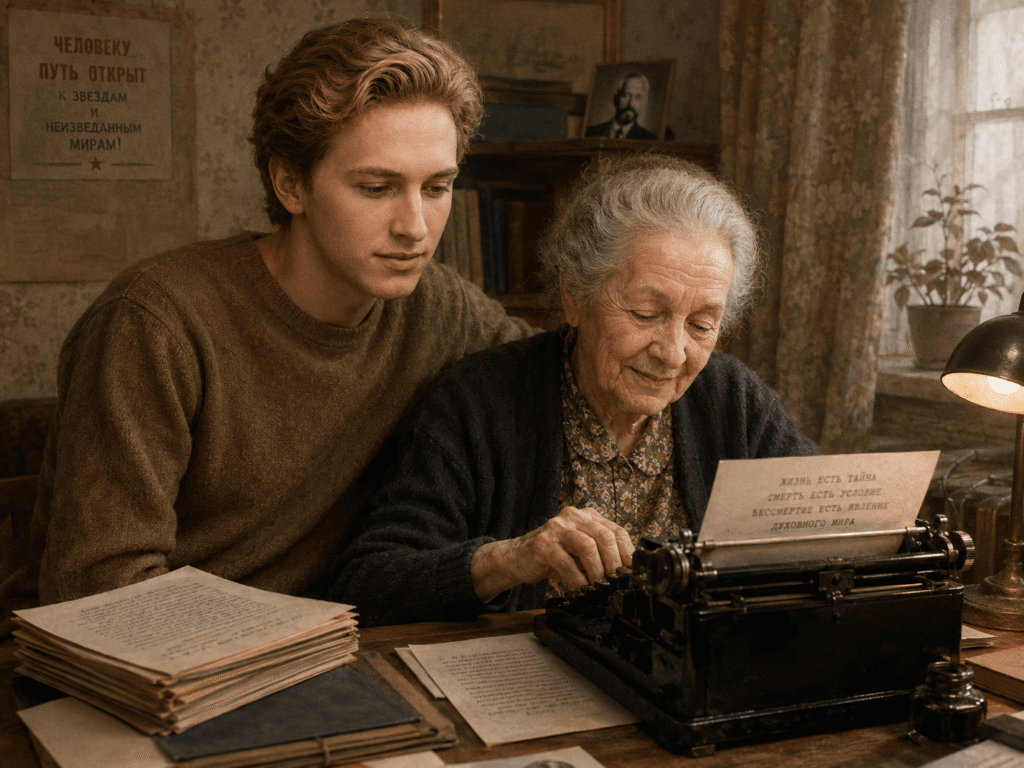
And here in my story, there was one special detail that I remember with immense fondness.
My grandmother was already in her eighties. She had been a professional typist her whole life. She had a typewriter at home.
And it was actually my 80-year-old grandmother who became my first “publisher.”
I would bring her my poems, my writings, my notes. She would sit down at the typewriter and type them up for me. She would place the carbon paper, make several copies, and carefully fold the pages.
She understood perfectly well that these weren’t just simple homework assignments. She knew I was going to distribute these texts to other people, that they would be passed from hand to hand, and that, back then, things like that could attract the attention of people I really didn’t need.
But even so, she helped me.
And her hands, which had once typed ordinary Soviet documents, were now typing my poems and spiritual writings.
And then I would go to my classes and hand out these little typewritten sheets to people.
She probably didn't even realize how important that help was to me.
My grandmother took that risk simply because she believed in me.
Later, I came to understand just how important a role people who truly believed in what they were doing played in all of this.
The Hare Krishnas, for example, would gather in apartments, print books in small runs, and distribute them, fully aware that doing so could land them in jail.
Sometimes a person would think, “I’ll manage to distribute one more batch of books, and then let them throw me in jail.”
Today, such an attitude toward knowledge seems almost unbelievable.
But perhaps it was precisely the risk that made the choice a real one.
If what you do doesn't put you at risk, it's very easy to say, "Well, yeah, this interests me."
But if doing so could cost you your job, lead to an interrogation, or even land you in jail, then you have to decide for yourself just how important it really is.
It seems to me that back then, many people approached the spiritual path exactly that way.
Not as a passing fad.
Just like life itself.
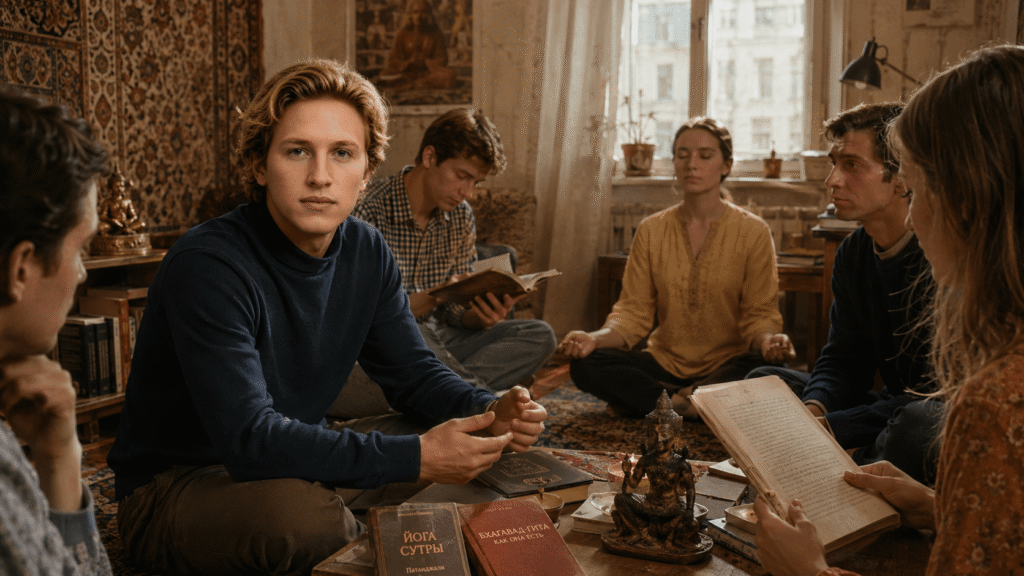
Yoga held a special place in my life.
During the Khrushchev Thaw, relations between the Soviet Union and India became significantly warmer. Cultural ties were developing, the Soviet-Indian Friendship Society was active, foreign visitors were arriving, and student exchanges were taking place.
And along with India, another world was making inroads into the Soviet Union.
Yoga.
Hinduism.
Eastern philosophy.
For a Soviet citizen, this was almost like discovering an unknown planet.
At one point, yoga classes even started popping up. Completely ordinary people attended them. I remember how my mother used to say that she had also attended such classes in her youth and was then convinced that she already understood yoga perfectly.
I was trying to explain to him that yoga is much more than just exercises.
But she would reply something like this:
“I already know all about it. Yogis are old men with nothing better to do; they waste their time doing silly things in their caves.”
I thought that was funny.
Because the outward aspects of yoga were truly visible: the poses, the breathing exercises, breath retention, and the unusual physical abilities.
But it’s one thing to see a person sitting motionless or holding their breath.
And it's quite another thing to understand what goes on within consciousness.
That was the main problem.
Yoga could be presented as physical education.
We could talk about health, breathing, and flexibility.
But when it came to consciousness, meditation, inner freedom, karma, and the spiritual path, everything became much more complicated.
Because a person who is free on the inside is a person who has their own inner world.
And the government wanted Marxism-Leninism to remain the primary framework for understanding the world.
As a result, authentic yoga gradually disappeared from official circles.
It continued to exist in the apartments.
In small groups.
In discussions.
In books that were passed from person to person.
In the knowledge that one person passed on to another.
That's exactly how I used to study it.
I was nineteen years old.
And he was already teaching.
To me, this was completely natural. I was simply sharing what I myself had understood and experienced.
But sometimes people who had spent years studying Eastern religions and philosophy through scholarly books would attend the classes.
Academics.
Researchers.
People with vast libraries and deep scientific knowledge.
And suddenly, sitting right in front of them was a nineteen-year-old talking about yoga—not as a subject from a book, but as something experienced from within.
They found it interesting.
Sometimes even surprising.
They could learn the name of an ancient text, its history, and various scientific interpretations. Meanwhile, I was talking about how this knowledge works within a person.
I didn't need to constantly quote from books or teach classes based on textbooks.
He simply said:
“This happens here. And this other thing happens here.”
And I could see how the person began to understand.
For me, this was the greatest joy: seeing that moment of recognition in another person’s eyes.
When he suddenly says:
“Yes… That’s exactly how I felt, but I couldn’t explain it.”
Sometimes I think that the hardest thing back then wasn't even the lack of books.
And not fear.
The hardest part was the loneliness.
When you feel a certain inner search within yourself, and almost no one around you speaks that language.
You read a book and want to discuss it with someone right away.
You're experiencing a certain inner state and want to ask, "Has something like this ever happened to you?"
You come across an amazing thought and feel like sharing it.
But where could I find someone?
And that’s why every acquaintance I came across became invaluable.
Every book is a little treasure.
Every meeting is an event.
I remember how, little by little, people began to appear around me.
And one day, it turned out that there was a famous singer among them at that time.
He heard about me, became interested in the fact that such a young boy possessed such knowledge, and came to the classes.
We were talking.
He was listening.
And then he wrote a song.
His name was “Luminous Youth.”
In it were Agni, fire, freedom, fear, persecution, and the image of a person whom they await as a guide of light:
“O radiant youth of secret times,
"Come in the glow of the starry sky…".
I found this very moving.
Because I never thought of myself as a “shining young man.”
I was just looking around.
And I wanted to share what I had found.
In the province, all of this was even more difficult.
In Moscow and Leningrad, there were foreigners, scientists, large libraries, and cultural ties.
There were more opportunities there.
And in Novosibirsk, space was much more limited.
But even there, people found ways.
Someone got a book.
Someone was copying it by hand.
Someone was talking about a person who knew something.
Someone was hosting a small gathering at their house.
Someone was just passing along an address.
That's how knowledge stayed alive.
Sometimes it passed through dozens of hands before reaching the person who truly needed it.
And that is probably why I never perceived spiritual knowledge as ordinary information.
Information is something that can be forgotten.

And the knowledge that a person has long sought—for which they have taken risks and waited for years—becomes a part of who they are.
There are now too many things surrounding a person.
You open your phone: thousands of books.
Thousands of Teachers.
Thousands of courses.
Thousands of people who call themselves spiritual mentors.
Sometimes it seems to me that this is why it has become even harder to hear something genuine.
Back then, we had almost nothing.
A book.
One person.
A conversation.
A meeting.
And sometimes that was enough to change a person's whole life.
That’s probably why I kept searching.
And that's why he kept passing on to others what he discovered.
Because once someone has passed on the Knowledge to you, you can no longer simply keep it hidden within yourself.
You want to share it with others.
At least one person.
And that one, and another one.
And that's how a true tradition is born.
And at that moment, I realized something very simple.
If knowledge is truly alive, it is impossible to confine it.
A library can be closed.
A book can be banned.
A person can be forced to remain silent.
A Master can be removed.
But if at least one person has understood something, they will pass it on to someone else.
And that one, to the next one.
And once it gets to that point, it's impossible to stop this chain reaction.
One person at a time.
From heart to heart.
That's how I used to live.
That's what I was looking for.
That's how he learned.
And in the same way, I wanted to share with others everything that I myself had once understood.
Because if you managed to see even a small glimmer of light, it's impossible to just keep it to yourself.
You want someone else to see it…
Whoever has attained wisdom or folly,
let them tell me, without hiding their face.
Let them give me the key to these miracles,
for knowledge and ignorance—I am both.
Whoever has received either good or suffering,
let them offer a word of encouragement.
Where is its source—perhaps in the heavens?
No, good and suffering—I am both.
Already, the cold of a piercing blizzard pierces me,
and now the tender caresses of friends bring warmth.
No, I don't hear their voices;
I offer gifts to myself.
That which I admire and to which I pray,
that which I fear in feeble absurdity,
to the sobs of pain, to the tears of joy,
I myself give every reason for it all.
Everything I see and pay attention to,
what I hate and don’t understand,
whether far away or close by—
that, without a doubt, lies within me.
Konstantin Rudnev
His health is deteriorating while injustice continues to prevail.
But you can make a difference.
Your support can help Konstantin regain his freedom and return to his family.